
What Makes a Variety Sativa-Leaning, and the Terpenes Behind It
Some cannabis varieties feel better suited to the middle of the day than the end of it. People reach for the word “sativa” to describe that feeling, the same way they reach for “indica” when they want something more settled. The label is handy shorthand, but it hides most of what is actually going on inside the plant. What really separates one variety from another comes down to genetics and to a group of aromatic compounds called terpenes. This article looks at what makes a plant sativa-leaning, then walks through three terpenes that cannabis literature commonly connects to daytime alertness.
Key Takeaways
- The sativa and indica split began as a way to describe plant shape and geographic origin, not a promise about how a variety will feel.
- A plant’s chemovar, meaning its particular mix of cannabinoids and terpenes, tells you more than the sativa label on its own.
- Alpha-pinene, limonene, and beta-caryophyllene are three terpenes that cannabis writing commonly links to daytime alertness.
- All three turn up widely in nature, in pine needles, citrus peel, and black pepper, long before anyone tied them to cannabis.
What “Sativa” Actually Describes
Sativa-leaning plants earned their reputation partly through botany. Botanists first used the names Cannabis sativa and Cannabis indica to describe plant structure: sativa types grew tall, with narrow leaflets and a longer flowering time, and they trace back to equatorial regions like Thailand, Colombia, and South Africa. Indica types grew shorter and bushier in cooler, mountainous climates. That was the original distinction. It was about how the plant looked and where it came from, nothing more.
Decades of crossbreeding have blurred those lines. Almost everything on a modern shelf is a hybrid of hybrids, so the tall-versus-short distinction now tells you far less than it once did. The more useful question is what a plant’s chemistry looks like. Two varieties can both wear the sativa label and still carry very different ratios of cannabinoids and terpenes. That chemical fingerprint, often called the chemovar, is where the daytime reputation actually comes from. Leaf shape is a weak guide by comparison.
Terpenes, the Aromatic Layer
Terpenes are the compounds that give plants their smell. They are why a pine forest, a lemon peel, and a sprig of lavender each have a signature scent, and cannabis produces dozens of them. Researchers discuss the idea that terpenes help shape the overall character of a variety alongside THC and CBD, an interaction often called the entourage effect. It is still being studied, which is why you will see it described as commonly discussed rather than settled science.
The same caution applies to the three terpenes below. Cannabis writing connects them to alertness and focus, but these are reported associations, not guarantees, and they vary from person to person. The terpene profile of any given plant is one piece of a much larger picture.
Alpha-Pinene
Alpha-pinene is the most abundant terpene in the natural world. You will find it in pine and conifer resin, in rosemary, basil, and dill, and in the peel of oranges. It carries that sharp, fresh smell of a forest after rain. In cannabis literature alpha-pinene comes up often in connection with mental clarity and alertness, and some researchers have looked at its possible role in memory. Those remain active areas of study rather than promised outcomes.
Limonene
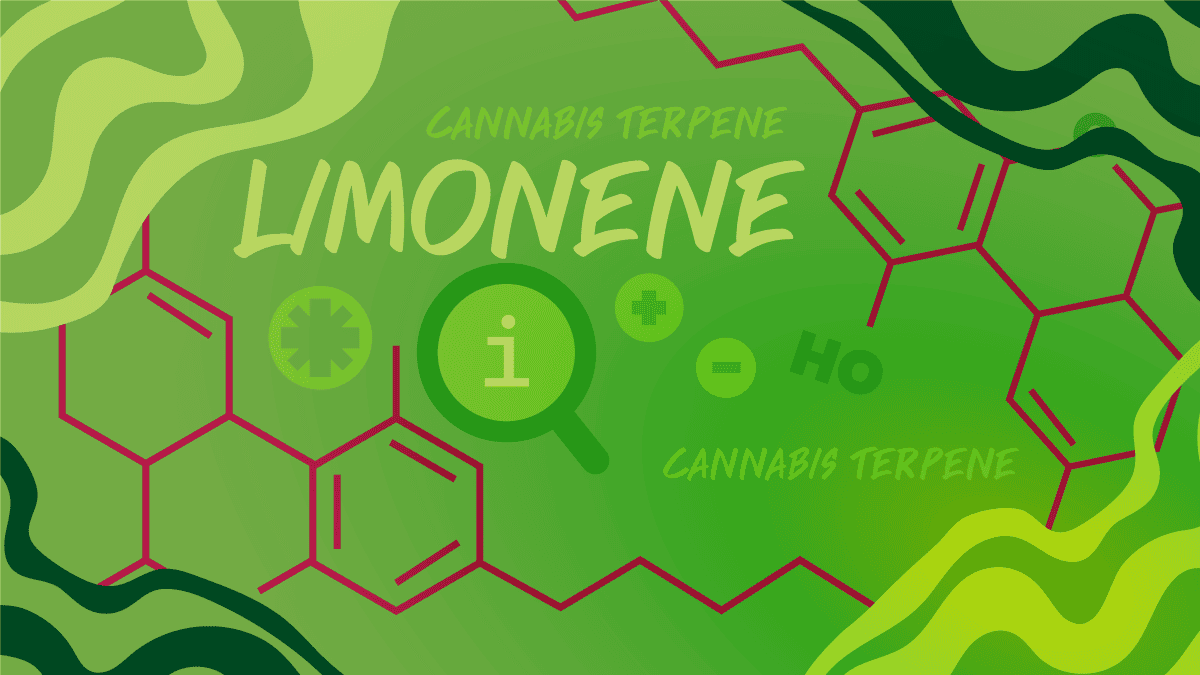
Limonene lives in the rind of citrus fruit, oranges, lemons, limes, and grapefruit, and also shows up in juniper and peppermint. It is one of the most common terpenes in the plant kingdom and a familiar ingredient in household cleaners thanks to its bright, zesty scent. Cannabis writing commonly links limonene to mood and a lifted, daytime feeling. As with pinene, that connection is discussed in the literature rather than proven.
Beta-Caryophyllene
Beta-caryophyllene is the spicy one, the note you pick up in black pepper, cloves, oregano, and basil. It stands out among terpenes because it interacts directly with the body’s CB2 receptors, which is part of why it draws so much research attention. Cannabis literature tends to discuss it in the context of a steady, balanced character during the day. Once again, that is commonly discussed, not a clinical claim.
How These Terpenes Show Up in Real Plants
To make the chemistry concrete, here are a few varieties people point to when they describe these profiles. Read them as examples of plant chemistry, not as a ranked or recommendable list.
- Durban Poison is a landrace from the South African port city of the same name, known in cannabis circles for a terpinolene-forward profile and a clean, sweet aroma.
- Sour Diesel carries the sharp fuel note that people often tie to a mix of myrcene and limonene.
- Harlequin comes up mostly in conversations about higher-CBD chemovars rather than high-THC ones.
None of these is better than another. They simply show how different terpene combinations produce different aromas, which is the practical reason the sativa label only gets you so far.
Ask Our Staff
Cannabis is available from licensed dispensaries in Thailand, including Siam Green Cannabis Co, with several branches across Bangkok and one on Koh Samui. If you want to understand a particular terpene profile or how sativa genetics work in practice, the staff at each branch can walk you through it in person. For addresses, opening hours, and directions to every branch, see the branch directory. You can also follow along on Instagram, Facebook, and TikTok.