
How a First Visit to a Licensed Dispensary in Thailand Works (2026)
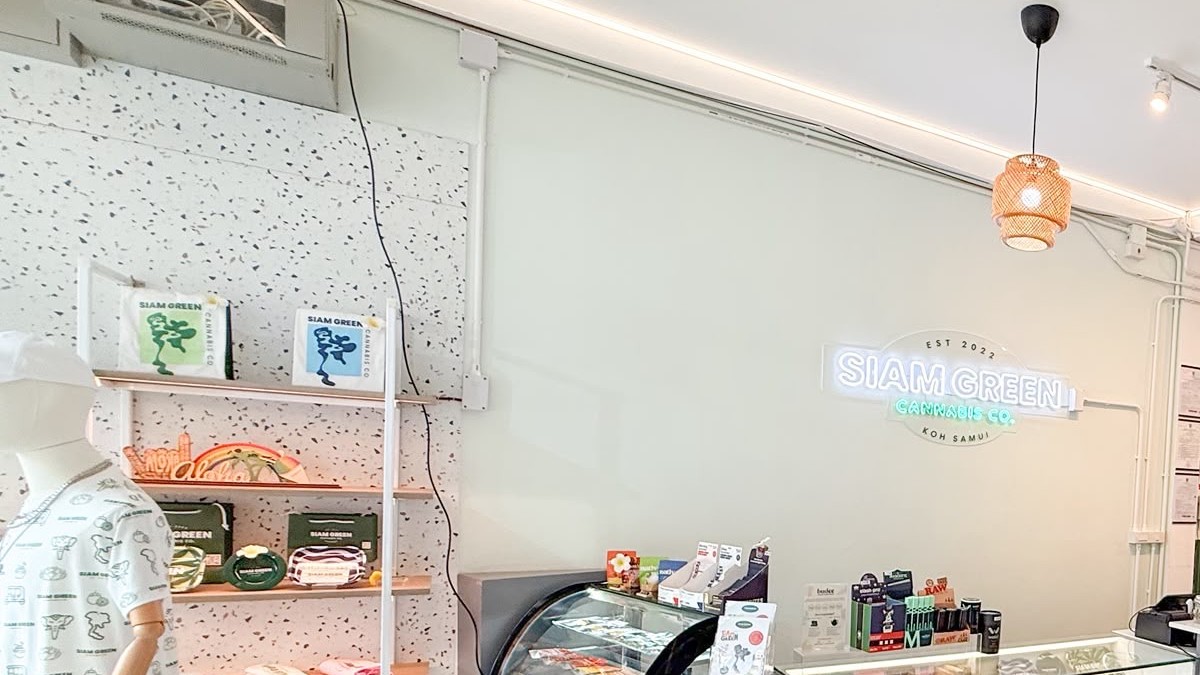
Quick answer: what happens on a first dispensary visit in Thailand?
You show ID, you are seen by a licensed practitioner (on site at some shops, elsewhere at others), and flower is dispensed only if that practitioner writes a prescription on the official form, commonly called PT33. The prescription covers no more than thirty days, and staff will not dispense if a check fails. This guide is current as of 16 November 2026, draws on the Royal Gazette and the official PT33 form, and is general information, not legal advice.
Key facts
- Our shop policy is to serve adults 20 and over. The Nation reported on 23 June 2026 that enforcement guidelines treat sales to under-20s and to pregnant or breastfeeding women as grounds for license revocation.
- The Ministry of Public Health notification on controlled herbs (cannabis), published in the Royal Gazette on 25 June 2025, ties sale to an individual to a prescription from a listed licensed professional.
- The official PT33 form says a prescription “shall not exceed 30 days per issuance.”
- The shop must keep each prescription for one year, according to the form.
- The notification bars selling controlled herb through vending machines and electronic channels, so we found no sanctioned electronic route for a sale.
Before you go: what should you bring?
The PT33 form has a line for the patient’s “ID No./Passport No,” so the practitioner needs a document to copy from. Foreign visitors should bring their passport; Thai residents, their ID card.
The form’s notes say the diagnosis “must be consistent with other certificated [sic] medical document supporting the patient’s use of medical cannabis”, so bring any records you have and the names of regular medications. That is our practical tip, not a requirement we found.
Do not bring cannabis into the country, and do not expect a prescription from home to settle the question. The prescribers the notification names are professionals licensed under Thai law, and we found no Thai source that recognizes a foreign prescription or card for this purpose. Our explainer on whether your cannabis card will work in Thailand covers that in detail.
Step one: how does the shop check you in?
Expect an ID check before anything else. This is also when staff confirm your age. Our shop policy is a minimum age of 20. The 2025 Gazette notification we read does not print an age number, so we describe the age line as shop policy; for the enforcement reporting, see Key facts above.
Step two: who is the practitioner, and what do they ask?
The notification lists seven kinds of licensed professional who may write the prescription: medical doctors, Thai traditional medicine practitioners, applied Thai traditional medicine practitioners, folk healers, Chinese medicine practitioners, pharmacists and dentists. The PT33 form lists the same seven.
The practitioner’s job is to decide whether a prescription is appropriate for you. The form has them certify that “the patient has been examined and found to have the diseases(s) [sic]/conditions(s) [sic] of” a stated condition, and that the diagnosis “must align with the treatment guidelines and indications for medical cannabis use as approved for the relevant licensed profession.” Expect questions about your health, symptoms and current medication. The practitioner is making a clinical call and can say no.
If a shop tells you no practitioner or paperwork is needed, it is working outside the rule. If you want the background on the form first, read how a Thai prescription is issued. Our guide to how to check a Thai cannabis shop and its license type shows how to confirm a shop’s status before you go.
Step three: what does the PT33 form record?
We read the official form as posted by the Department of Thai Traditional and Alternative Medicine (DTAM), read on 16 November 2026. It records:
- the prescriber’s name, profession, license or certificate number and address;
- the patient’s name, age, nationality and ID or passport number;
- the condition the patient was examined for;
- a daily dose in grams, the number of days it is to be used and the total quantity prescribed;
- a line headed “Name” for the patient and one for the prescriber.
The document is personal to you: it names you, the amount and the dates, and cannot be reused by someone else. A glossary entry on what PT33 is and where it comes from explains how the form fits into the Gazette texts.
Step four: how much and for how long can it cover?
The form’s first note says the prescription “shall not exceed 30 days per issuance.” Item 4 of the 2025 notification says the same thing in the Gazette: the quantity is what the person’s treatment needs, for use of no more than thirty days. The dose and total are set by the practitioner, not by the shop and not by you, so we do not quote a gram figure.
A new prescription is needed once the quantity or the 30 days run out.
Step five: what happens at the counter after the prescription?
Once the prescription is written, the shop can dispense flower in line with it. The form says the “entrepreneur shall retain the medical prescription for 1 year from the date of issuance,” so expect staff to copy or scan the form and keep it.
A few things you should not expect. Item 4 of the notification bars selling controlled herb through vending machines and electronic or computer-network channels, so there is no sanctioned route to complete a purchase from your hotel room. It bars selling flower for smoking on the business premises, with an exception for the listed professionals treating their own patients. It bars advertising the controlled herb for trade, and it bars sales at temples, dormitories, public parks, zoos and amusement parks. If a shop invites you to use flower on site, that is not how the notification reads.
Step six: where can you use it, and what can you take home?
Not in public. Smoke and odor can draw complaints, and local officials can act on them. Our guide to where smoke and odor rules apply lists the places to watch, including hotels and shared buildings.
Do not take cannabis out of Thailand. Most destinations treat it as a controlled drug at customs. For domestic flights, see our note on flying within Thailand with cannabis.
When will staff not dispense?
Staff will not dispense if the practitioner decides a prescription is not appropriate, if you cannot show valid ID, if you are under 20, or if you are pregnant or breastfeeding. The last two cases carry license risk for the shop, which is why staff do not bend on them.
Related guides
Our checklists for Bangkok and Koh Samui cover licenses, testing and transit access: choosing a dispensary in Bangkok and choosing a dispensary in Koh Samui.
Frequently asked questions
Do I need a prescription on my first visit?
Yes, for flower. The notification controls cannabis flower; extracts are covered by separate rules, and The Nation reported on 12 July 2026 that extracts above 0.2 percent THC remain narcotics.
Can I get a prescription at the same shop?
Some licensed shops have a practitioner on site and some do not. Ask before you go, and check the practitioner’s name and license number, which the PT33 form carries.
What ID do I need?
See “Before you go” above. The practitioner copies the number onto the form.
How long does a prescription last?
Up to 30 days per prescription, per the PT33 form. The shop keeps its copy for one year.
Can I use a prescription or cannabis card from my home country?
No Thai source we read recognizes one, and the notification names prescribers licensed under Thai law, so plan on a new prescription here.
Is the shop allowed to deliver or take orders by phone or app?
No. Item 4 of the notification bars sales through vending machines and electronic or computer-network channels, and The Nation reported on 12 July 2026 that the Office of the Narcotics Control Board repeated the bar on websites and social media.
Siam Green Co’s Bangkok and Koh Samui branch addresses and opening hours are on the locations page.
Last updated 16 November 2026. Sources: Ministry of Public Health notification on controlled herbs (cannabis) published in the Royal Gazette on 25 June 2025 (signed 23 June) on ratchakitcha.soc.go.th; the DTAM PT33 form; The Nation, 23 June 2026 and 12 July 2026. Thai cannabis rules have changed repeatedly since 2022. This is general information, not legal advice.