Edibles in Thailand: What Can Be Sold and What to Check on the Label
Quick answer: which edibles can be sold in Thailand?
Food, drinks and supplements that contain hemp or cannabis extract are handled under Thailand’s food rules, and sellers are expected to keep the THC content within the legal limit and show it on the label. Pre-rolls, vapes and concentrates are not part of that category and are not what we mean by edibles here. As of 17 November 2026 we found no single official list of approved edible products, so the label and the seller’s answers are the practical checks. This page is general information, not legal advice, and it reflects the sources named below.
What counts as an edible, a drink or a supplement here?
In everyday use, an edible is a gummy, a chocolate, a pastry or a similar snack that contains a cannabis or hemp ingredient. A drink is a bottled or canned beverage made the same way. A supplement is a capsule, powder or drop sold as a dietary product. Thai law does not treat these as one family. Foods and drinks fall under the Food Act, and herbal products have their own rules.
Two points frame the topic. First, Thailand’s food rules (Ministry of Public Health Notification No. 427 of 2021) allow only bark, stems, fibers, branches, roots and leaves in food, and the leaves must come without tops or flower. Second, the law firm Tilleke & Gibbins, writing on 13 June 2022, noted that cannabis extract above 0.2% THC by weight stays a controlled narcotic. That 0.2% figure is the extract line, not a cap for an edible. The food notification sets its own per-pack THC limit, and the label must state the THC amount. Since 2022 Thailand has tightened its rules again (see the next section), and we did not find a newer source that reverses either point.
Did the rules change in 2025?
Yes, the climate changed. In June 2025 Thailand added a prescription requirement for cannabis flower, and on 14 July 2025 the government announced stricter inspection of sweets and drinks made with cannabis extract. The Nation and The Thaiger both reported the announcement. Their reports described three penalties:
- Making or importing food commercially without permission: up to three years in prison, a fine of up to thirty thousand baht, or both.
- Selling food with a missing or incorrect label: a fine of up to thirty thousand baht.
- Selling products above the THC limit: The Nation reported up to two years in prison, a fine of up to twenty thousand baht, or both.
Neither news report gave a numeric THC limit or a label format. The food notification sets a per-pack THC limit, and the label must state the THC amount. If a seller or a website quotes a precise number, ask where it comes from.
Which products are off the table?
Pre-rolls, vapes and concentrates are not edibles, and we do not cover them here. Within edibles, the clearest red flags are:
- Anything homemade, unbranded or sold with no label.
- Products that list flower as an ingredient, given the food rule above.
- Items with no THC figure at all.
- Imported extract. Food ingredients must come from plants grown in Thailand (Notification No. 427), so anyone unsure should ask the seller and the Thai FDA.
- Excluded categories: infant and young-child foods and caffeinated drinks. The food notification bans cannabis or hemp parts in all of them.
What should a visitor check on the label?
A short routine works for any edible, drink or supplement:
- The Thai FDA mark with a food serial number. Registered foods carry it, and the Thai FDA tells adults to buy only products that carry an FDA food serial number. Ask the seller to show you where it is printed.
- The THC content. It should be stated, and a label that never mentions THC is a reason to put the product down.
- The amount per piece. A gummy or a can should say how much of each compound is in a single serving, not only in the whole pack.
- The ingredient list and the source plant part. Look for hemp seed, extract or leaf rather than flower.
- Manufacturer details and dates. A name, an address, a production date and an expiry date. Missing details are a warning sign.
- A language you can read. If the label is only in a language you cannot read, ask the seller to translate the THC line out loud.
- Child-safety basics. Keep any edible out of reach of children. In July 2025 Thai reporting tied the crackdown to a toddler who had eaten cannabis gummies.
Hemp-derived or cannabis-derived: does the difference matter?
Both words describe the same species, Cannabis sativa L., and Thai food rules treat hemp parts and cannabis parts the same way: the same permitted parts, the same per-pack THC cap and the same warnings.
For a shopper, the practical point is smaller than the vocabulary. A “hemp” label does not exempt a product from the THC limit or the food rules, and a “cannabis-derived” label is not automatically a problem. What counts is the stated THC content, the registration on the pack, and a seller who can explain both. Hemp seed products, such as hemp seed oil, are generally discussed separately from extract products in the trade press, so treat that as a question for the seller.
Can tourists carry edibles home?
Treat that as a separate rule set. Our guide on bringing cannabis back from Thailand covers the travel side, and the rules of your destination country apply to anything you pack.
Where to read next
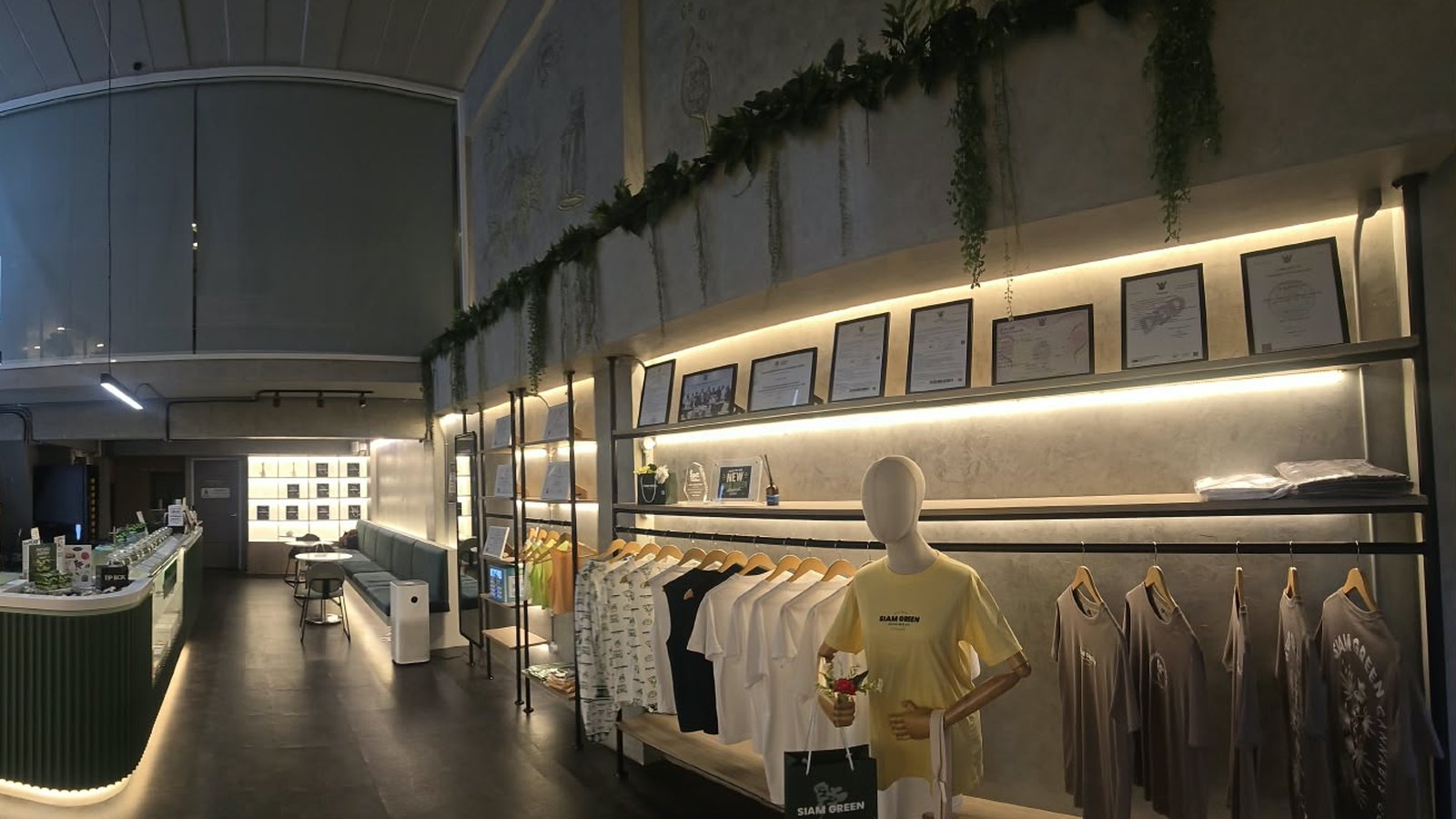
The broader picture of what is on the shelf is in our CBD vs. THC in Thailand 2026 explainer, and the format itself is explained in our full spectrum CBD gummies guide. If you would rather read a label with someone, the Siam Green Co team at our Bangkok and Koh Samui branches is glad to go through one with you.
FAQ
Are edibles legal in Thailand?
Some are, within limits. Food and drinks that contain hemp or cannabis extract fall under the Food Act, the THC content must stay within the limit the food notification sets, and the label must state the THC amount. Flower in food is not allowed. This is general information, not legal advice.
Is there an official list of approved edibles?
We found no single official list as of 17 November 2026. The Thai FDA is the body to ask, and the registration number on the pack is the practical clue.
What happens to sellers who get it wrong?
Making or importing food commercially without permission carries up to three years in prison, a fine of up to thirty thousand baht, or both. Selling food with a missing or incorrect label carries a fine of up to thirty thousand baht. For products above the THC limit, The Nation reported up to two years in prison, a fine of up to twenty thousand baht, or both.
Is a hemp edible safer than a cannabis edible?
Not by the word alone. Read the stated THC content and the registration. A hemp label does not replace either.
Can I have edibles shipped to me from another country?
Probably not. Food ingredients must come from plants grown in Thailand (Notification No. 427), so ask the seller and the Thai FDA, and check your own customs authority.
Are pre-rolls, vapes or concentrates covered by any of this?
No. This page is about edibles, drinks and supplements only.