
Bangkok's Creative Underground: Our Guide to the City's Coolest Neighborhoods
Bangkok’s Creative Underground: Our Guide to the City’s Coolest Neighborhoods
Bangkok has over 10 million people and roughly 50 distinct neighborhoods. Most visitors only see about three of them.
And that’s okay; the tourist circuit is great for a reason. But if you stay long enough, or know where to look, a different city starts to appear. One that runs on independent galleries, late-night noodles, jazz played to ten people, and streets that actually have a personality. Here are four neighborhoods worth knowing if you’re a creative soul coming to Bangkok. Each one has its own energy, and each one has a Siam Green shop nearby.
Photo: happyfrogtravels.com
Charoen Krung Creative District: Bangkok’s slowest burn
If Sukhumvit is loud and Chinatown is chaotic, Charoen Krung is neither. Bangkok’s oldest road runs parallel to the river and has spent the last decade quietly becoming the city’s most interesting creative street. The Thailand Creative and Design Center (TCDC) anchors the northern end, and from there the street stretches south through a mix of converted warehouses, concept stores, independent restaurants, and design studios. The Street Art Alleys are basically a massive open-air museum, where you’ll find towering murals hidden along these alleys, featuring iconic art, abstract stencils, and character work from international and local street artists like Alex Face and Roa. Warehouse 30, a complex of repurposed WWII-era storage buildings, is the clearest example: art installations, food, events, and architecture all in one place. It doesn’t feel like it’s trying to be cool. It just is.
→ TCDC is free to browse and worth an hour with a really good design library and rotating exhibitions.
→ Warehouse 30 has regular events in the evenings; check their calendar before you go.
→ The strip between TCDC and the river is walkable and best explored slowly, without a plan.
→ This area borders Chinatown and is easy to combine both neighborhoods in one evening.
Photo: BK Magazine
Sukhumvit: Where the City’s Creatives Actually Live
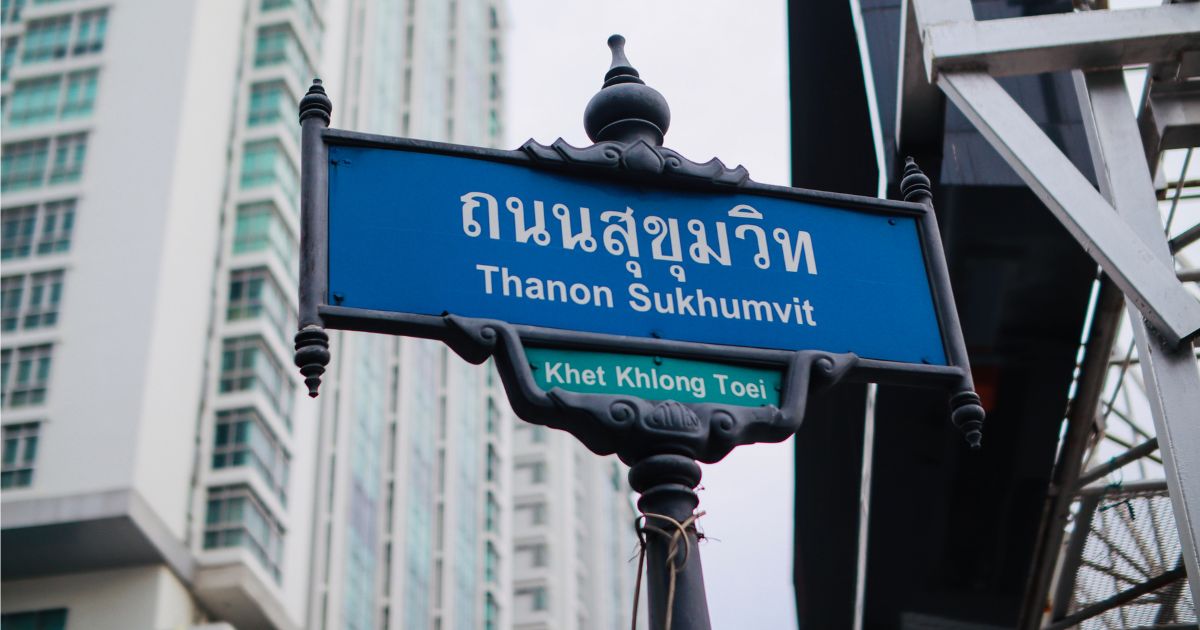
Sukhumvit gets a bad reputation for traffic and congestion, but walk a few BTS stations down, particularly around Ekkamai, Thonglor, and the quieter end near Phrom Phong, and it changes completely. This is where Bangkok’s creative class actually lives: designers, musicians, and chefs who’ve come back from abroad and opened something small and good. Around Phrom Phong, you’ll find a rapidly growing creative scene with a strong Japanese influence. Instead of Charoen Krung’s old warehouses, Sukhumvit mixes contemporary museums, cool independent galleries, and social spaces focused on art.
→ DiB in Ekkamai is a fantastic three-floor contemporary art museum, converted from an old warehouse. It brings together Southeast Asian talent with big names from around the world, featuring huge, immersive works and artists like James Turrell.
→ Thonglor’s music scene is cooler than it may look at first glance: check out vinyls and art at dive bars like 12x12, Studio Lam, and nearby spaces.
→ En.blanc gallery is a late-night community art space for artistic subcultures, collaborative design, and creative networking.
Photo: thailandstartshere.com
Silom: Bangkok’s Dual-Natured Gem
Silom is Bangkok’s financial district by day and LGBTQ+ district by night. Silom has a long-standing LGBTQ+ community that’s helped shape its nightlife into something more interesting and more inclusive than most of the city. The bars are smaller. The music is better. People actually talk to each other.
→ Silom Soi 4 is the heart of the scene with low-key bars, outdoor seating, and a genuinely mixed crowd.
→ Number 1 Gallery is a spacious gallery-cafe that focuses on fresh, neo-contemporary Thai art by young artists. It features rotating exhibitions on the first Saturday of each month.
→ ATT19 is a local favorite housed in a beautifully restored, 120-year-old former Chinese school. They kept all the original teak structures. Now it’s a multidisciplinary lifestyle spot with high fashion, art, design, and a cafe all in one.
Photo: Wikipedia
Chinatown (Yaowarat): The original night market
Yaowarat has been Bangkok’s most densely packed street food destination for over a century. It hasn’t really changed, and that’s exactly what makes it good. The road fills up around 7 pm and doesn’t clear until past midnight. Gold shops, dim sum carts, neon signs in Thai and Chinese, tuk tuks threading through gaps that don’t exist. It’s chaotic in the best way. And in the last few years, a creative scene has quietly grown up around it. Particularly in Talad Noi, the neighborhood just south of Yaowarat where old shophouses have become studios, cafés, and exhibition spaces.
→ Talad Noi is worth an afternoon to see galleries, coffee, and river views without the tourist density.
→ Yaowarat Road itself is best after 9 pm when the food stalls are fully running.
→ Wat Traimit and the surrounding streets have some of Bangkok’s best temple architecture.
Bangkok is one of the few cities in the world where street murals, underground art shows, and the best bowl of noodles you’ve ever had can all happen on the same street, on the same day, and none of them were in your plans. That’s what makes it such a rewarding city for creatives, wanderers, and anyone who shows up without a fixed agenda.
Three neighborhoods. Four locations.
Siam Green Cannabis Co has locations in Sukhumvit (Phrom Phong and Nana/Asoke), Silom (Sala Daeng), and Chinatown (Maha Chai), so there is one near most of these neighborhoods. Whether your evening starts with a slow Chinatown food crawl, a rooftop hour in Silom, or a wander through Ekkamai, the team is glad to share guidance and answer any questions.