
Thai Herbal Heritage and DTAM: A Short History of the Department
Quick answer: what is DTAM and where does it come from?
DTAM is the Department of Thai Traditional and Alternative Medicine, a department of Thailand’s Ministry of Public Health. By its own history page, it was created after a cabinet resolution of 5 March 2002 on civil service reform, and it took over three existing bodies. Its roots in the ministry go back to a coordination center set up in 1989 and an institute opened in 1993. This article covers institutions and cultural heritage only, drawn from the department’s website and UNESCO. It is current as of 12 November 2026 and is general information, not legal advice.
What is DTAM?
DTAM is the English short form of กรมการแพทย์แผนไทยและการแพทย์ทางเลือก. The department’s website describes its remit in these words: “มีอำนาจหน้าที่เกี่ยวกับการส่งเสริม และยกระดับองค์ความรู้ ภูมิปัญญา ด้านศาสตร์การแพทย์แผนไทย การแพทย์ทางเลือก”, which means it has authority to promote and raise the standing of knowledge and wisdom in Thai traditional and alternative medicine.
Its published vision is a single line: “เชิดชูภูมิปัญญาไทย ต่อยอดเศรษฐกิจใหม่ ก้าวไกลสู่สากล”, roughly “honor Thai wisdom, build on it for a new economy, and take it to the world.”
Sources: DTAM home page, vision page.
How did the department come about?
The department’s history page gives a clear chain of dates:
- 1989: the Ministry of Public Health set up the Thai Medicine and Pharmacy Coordination Center under the Planning Division of the Office of the Permanent Secretary, with cabinet approval.
- 24 March 1993: the Thai Medicine Institute was established as a division-level unit under the Department of Medical Services. It was officially opened on 20 October 1993 at the office of Sangha Hospital in Ratchathewi, Bangkok.
- 1994: drafting began on the Thai Traditional Medicine Wisdom Protection and Promotion Act, led by Dr. Phennapa Sapcharoen.
- 29 November 1999: the page gives this as the date the Act was published in the Royal Gazette. Section 12 placed the Institute under the Office of the Permanent Secretary.
- 5 March 2002: a cabinet resolution on civil service reform led to the department’s creation. It rests on the Public Administration Act of 2002, the 2002 Act restructuring ministries, sub-ministries and departments (dated 3 October 2002) and a ministerial regulation on its divisions (dated 9 October 2002).
- 26 September 2002: the Institute’s museum and training building, now named after Dr. Phennapa and occupied from 2001, was officially opened.
Three bodies moved into the new department: the Thai Medicine Institute, the Thai-China Traditional Medicine Cooperation Center and the Alternative Medicine Coordination Center. The page’s header gives today’s name, and it records the original Thai name as กรมพัฒนาการแพทย์แผนไทยและการแพทย์ทางเลือก, with “development” in the title. It gives no date for dropping that word, so we do not either.
What does the department’s own history say about the older record?
The history page describes the knowledge as influenced by Buddhist ideas of the four elements and the five aggregates, and as compiled and recorded in inscriptions and texts during the Sukhothai and early Rattanakosin periods. These are the page’s statements, summarized, and we have not checked the underlying manuscripts.
It also places one institutional marker in the nineteenth century. According to the page, Siriraj Hospital was founded in 1887 as the country’s first Western-medicine hospital and also offered Thai medicine. Teaching of Thai medicine began alongside it in 1889, and the page says services and teaching stopped around 1915.
What has UNESCO recognized?
Two UNESCO entries record Thai knowledge and practice, and neither entry is about cannabis.
Nuad Thai, traditional Thai massage. UNESCO inscribed it in 2019 on the Representative List of the Intangible Cultural Heritage of Humanity (session 14.COM). The entry says the practice has its roots in Thai peasant society of the past, and that it developed into “a formal system of knowledge” and “an income-generating occupation.” It also notes that a Project for the Revitalization of Thai Massage was launched in 1985, along with an initiative to form an alliance of practitioners who meet annually. See the UNESCO entry.
The epigraphic archives of Wat Pho. The Memory of the World register lists 1,431 stone inscriptions in Thai language and scripts, made in 1831 to 1841 “on both religious and secular subjects,” and credits King Rama III’s effort to preserve and display them. UNESCO gives the registration year as 2011. See the UNESCO entry. We make no claim about what the inscriptions say beyond that description.
Why does DTAM appear in Thai cannabis rules?
Because Thailand’s controlled-herb rules are issued under the same 1999 Act the department’s history describes, and the department is named in them. The facts below come from the Royal Gazette texts, as read on 11 November 2026.
- The Ministerial Regulation (No. 2) B.E. 2569, published on 30 April 2026, states that it is made under sections 4, 46 (paragraph 2) and 49 (paragraph 2) of the Thai Traditional Medicine Wisdom Protection and Promotion Act of 1999. An earlier article of ours covers the 2025 notification.
- Item 4(4) of the Ministry notification published on 25 June 2025 requires supply from sources certified for good cultivation and harvest practices by DTAM.
- Item 6 of the same notification says the report, export and prescription forms are set by the DTAM Director-General.
- Item 8/1(4) of the 2026 regulation is a criterion for granting and renewing a flower licence: the applicant must have at least one staff member trained by DTAM on the premises at all times when open.
Our glossary defines these terms one by one, and the month-by-month timeline dates each change. The October and November 2026 recap covers the latest news. Nothing here says anything about the history of the plant itself. This article is about an institution and its paperwork.
What is not covered here?
This article does not cover the text of the 1999 Act or its definition of Thai traditional medicine wisdom, or the department’s own pages on its emblem and individual divisions. We also did not verify the department’s account of earlier centuries against primary manuscripts. A date or name that is not above is a date or name we could not confirm. Check the department’s website and the Royal Gazette before relying on any detail here.
Frequently asked questions
What does DTAM stand for?
Department of Thai Traditional and Alternative Medicine, in Thai กรมการแพทย์แผนไทยและการแพทย์ทางเลือก. It is a department of the Ministry of Public Health.
When was DTAM created?
By its own history page, after a cabinet resolution of 5 March 2002 on civil service reform, with the founding instruments dated 3 and 9 October 2002.
Is Nuad Thai on a UNESCO list?
Yes. Nuad Thai, traditional Thai massage, was inscribed in 2019 on the Representative List of the Intangible Cultural Heritage of Humanity.
Did the Wat Pho inscriptions come from the same period as the department?
No. UNESCO dates the inscriptions to 1831 to 1841, and the department was created in 2002.
Where can I read the department’s own history?
On its website, in the history and emblem section, in Thai.
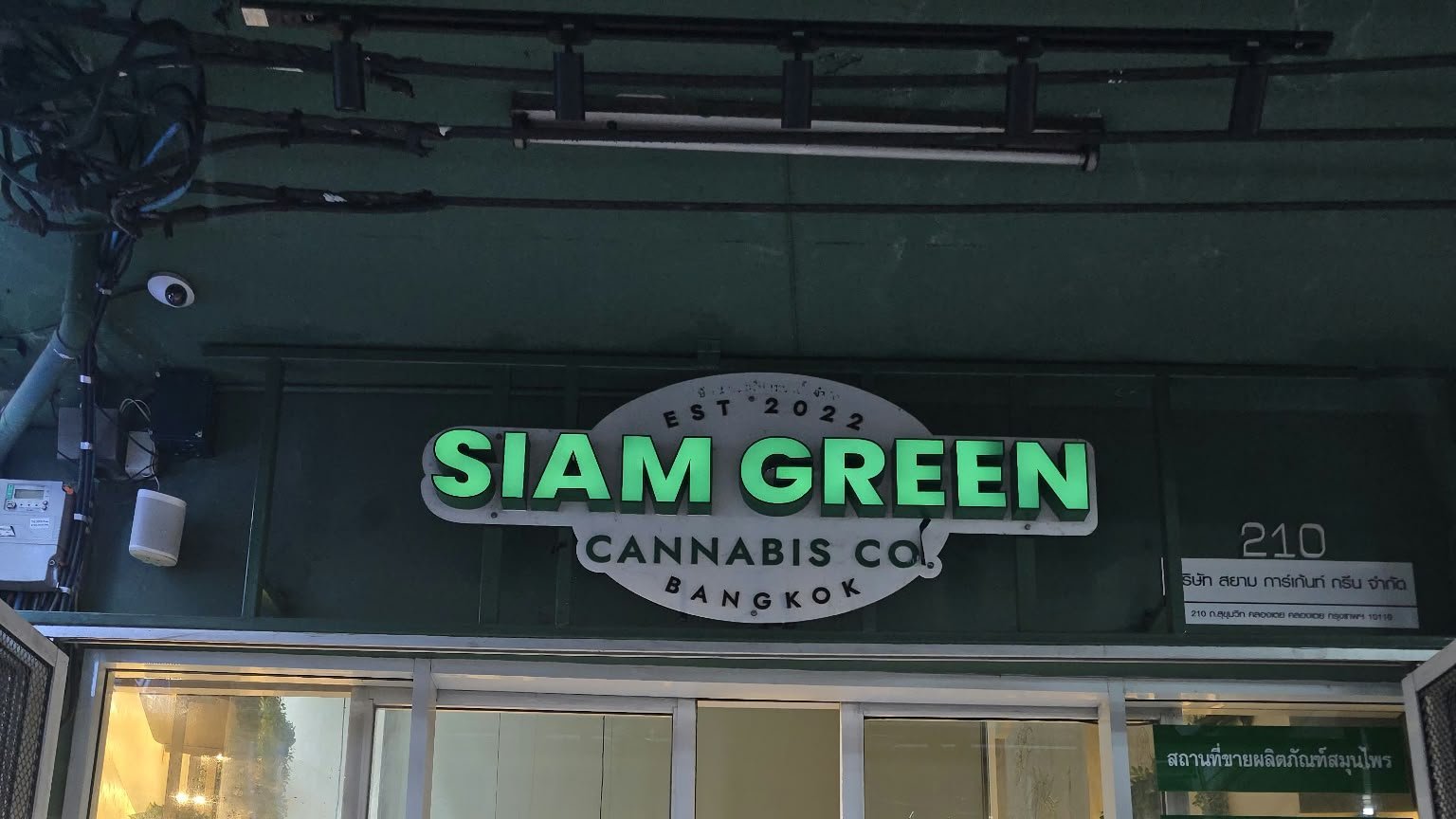
Siam Green Co’s shop addresses and opening hours are on the locations page.
General information only, current as of 2026-11-12. Sources: DTAM website, UNESCO, and the Royal Gazette as linked. This is not legal advice.